



A new supplier can be created in the system quickly. Enter master data, add payment terms, issue a purchase order.
The actual review should start earlier.
A business function wants to work with a new provider. Procurement checks the commercial conditions. Depending on the requirement, quality may need certain documents. At the same time, it must be clear whether the supplier is allowed to be used at all.
If this review happens only on the side, open points often appear later.
Supplier qualification is meant to prevent that. Not every provider needs to go through a full audit process. What matters is that companies classify suppliers by risk and define which level of review is required in each case.
In the end, the question is simple: is this supplier suitable for the intended use?
What supplier qualification means
Supplier qualification describes the process by which a company reviews a new supplier before starting to work with them.
In procurement, this is about more than product quality. Depending on the requirement, delivery capability, financial stability or technical requirements may also matter. Compliance or sustainability requirements can be relevant as well.
The scope of the review depends on the risk.
A supplier for office materials does not need the same process as a provider of critical components. The depth of review can also vary significantly for services.
Supplier qualification should therefore not be understood as one standard questionnaire for everyone.
A risk-based classification is more useful. Critical suppliers are reviewed more closely. For simple standard requirements, the process can remain much leaner.
Supplier qualification is therefore closely connected to supplier management and risk management in procurement. It first decides whether a supplier can start. Ongoing evaluation begins after that.

Why supplier setup should not be the starting point
New suppliers often emerge from a specific situation.
An existing provider cannot deliver. A project needs an alternative at short notice. Or a business function wants to work with a service provider it already knows.
Under time pressure, reviews are often pushed back.
The supplier is created in the system even though the scope of service is not yet fully clear. Certificates are expected to follow later. Contractual questions remain open. Responsibilities are not clearly defined.
As long as the first order works, this often goes unnoticed.
Problems arise later. Invoices cannot be processed. Documents are missing. In the event of a complaint, nobody knows who is responsible. Or it becomes clear that the supplier was never fully checked for the intended use.
Good supplier qualification cannot prevent every such case. But it reduces the likelihood that important points only surface once business is already underway.
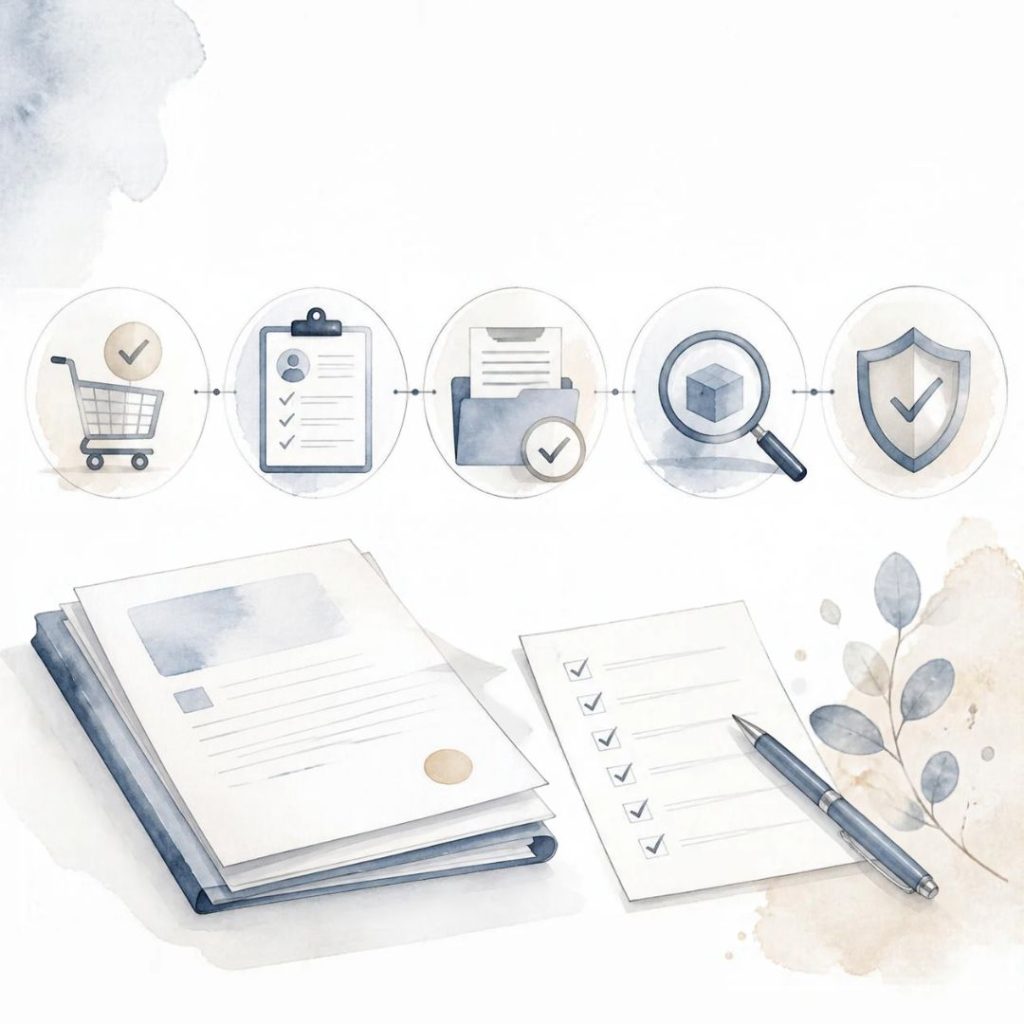
The supplier qualification process
A supplier qualification process does not have to be extensive. Above all, it should fit the procurement case.
It starts with the requirement.
Why is a new supplier needed? Is it about an additional source of supply, a new service or a short-term alternative?
Then comes the initial selection. Procurement checks which providers are generally suitable. References or first commercial conditions may be relevant here. In technical procurement, other factors matter more than in standard services.
The next step is to obtain the required information.
This is often done through a supplier self-assessment. Depending on the risk, certificates or insurance documents may be added. Technical documents may also be required.
These documents should not simply be collected. They must fit the specific use case.
An existing certificate does not automatically mean that a supplier is suitable. Conversely, a missing document does not necessarily rule out collaboration if it has no material relevance for the procurement case.
For critical suppliers, a deeper review may be necessary. This can include an audit or sample inspection. In technical areas, initial sample approval may also be required.
The process ends with supplier approval.
It should be documented what the supplier has been approved for and who made the decision.
Supplier qualification criteria
A general criteria catalogue rarely fits all suppliers.
Which points need to be checked depends on the category and the specific risk.
Commonly relevant criteria include:
- quality and quality management
- delivery capability
- technical competence
- required certificates
- financial stability
- compliance requirements
- sustainability requirements
- IT or data security for digital access
- location and logistics
- communication in day-to-day business
Not every point carries the same weight for every supplier.
For a technical drawing part, manufacturing capability may be especially important. For a service provider with access to sensitive data, data security becomes more relevant.
For critical components, the decisive question may be whether the supplier can deliver reliably over time and whether alternatives are available.
Supplier qualification should therefore fit the category management approach in procurement. Only when the risks of a category are understood can the necessary depth of review be defined sensibly.
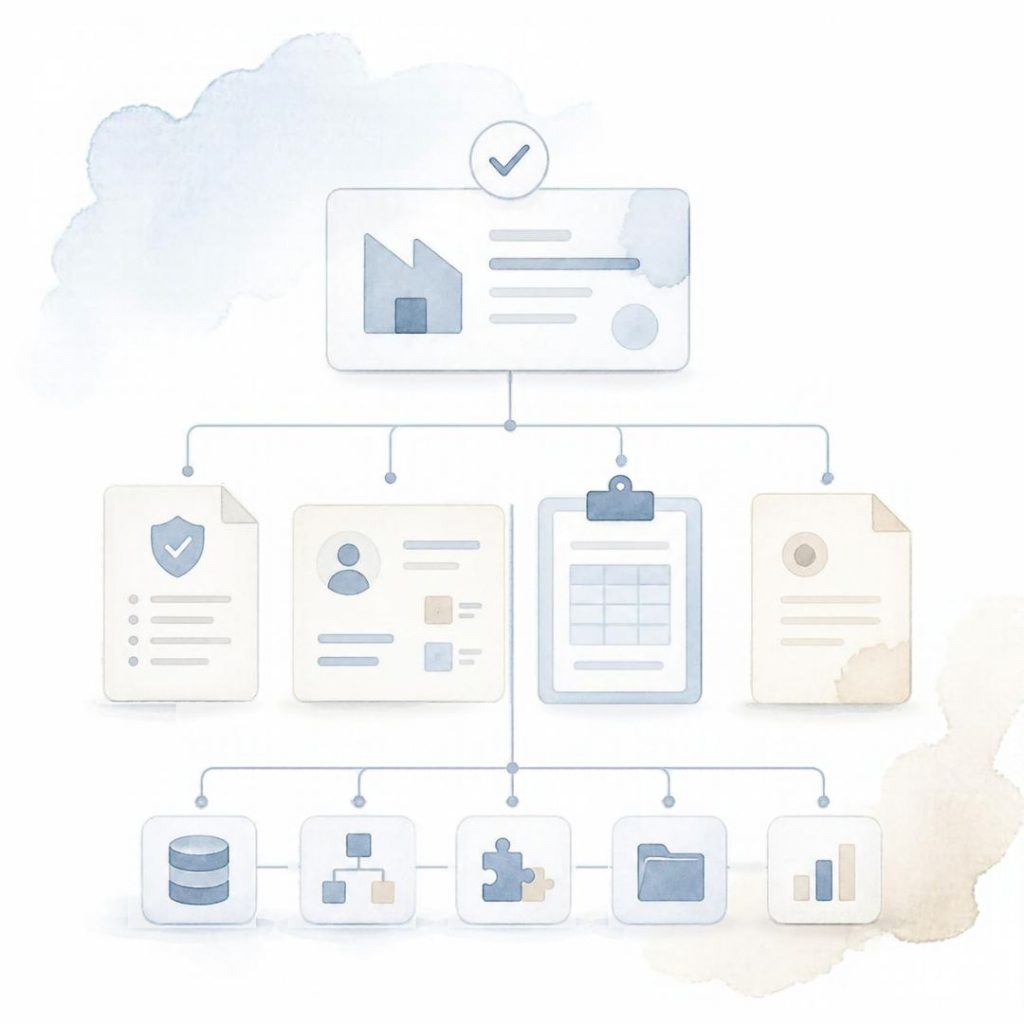
Supplier onboarding before the first order
An approved supplier is not automatically ready for operational use.
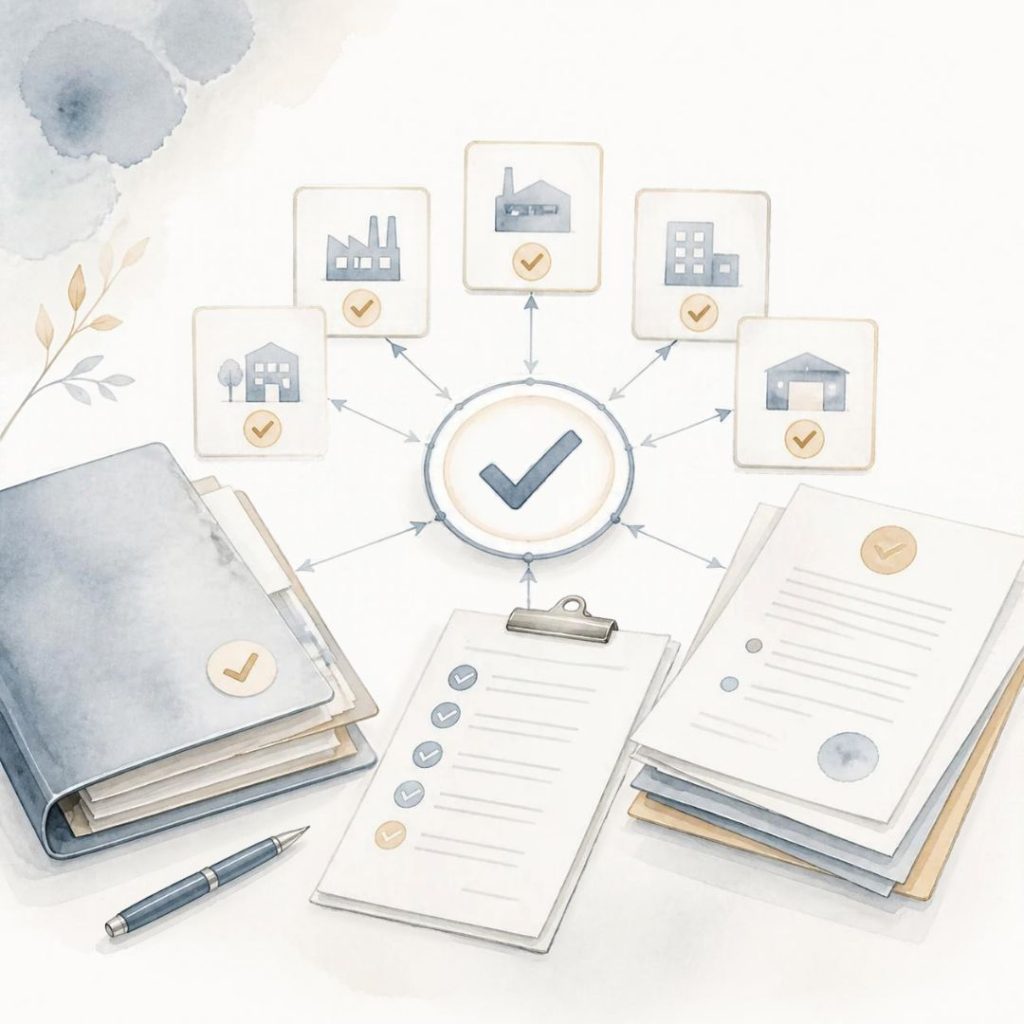
Supplier onboarding prepares the practical side of the collaboration.
This includes master data and contacts. Payment terms and ordering routes also need to be clear. Depending on the company, further requirements may apply.
If these basics are missing, problems arise even when the supplier is suitable from a technical or commercial point of view.
A typical case: the supplier has been approved and the first order is issued. Then it turns out that the wrong invoice address has been entered. The purchase order number is also missing from the invoice.
That does not automatically make the supplier unsuitable.
The problem lies in the onboarding.
Before the start, it should therefore be clear how orders are placed and which information the supplier must use. It should also be clear who is contacted if something does not match.
Supplier onboarding is closely linked to practical approval routes and purchase-to-pay processes. The article on maverick buying prevention explains why clear procurement channels matter when orders, approvals and documentation need to work together.
Supplier onboarding for international suppliers
The term supplier onboarding is often used when companies deal with international or digitally connected supplier processes.
The underlying task is the same: an approved supplier must be integrated in such a way that collaboration works in practice.
International suppliers create additional requirements.
For example, it may need to be clarified which language applies to contracts. Tax or customs requirements may also play a role. For certain procurement cases, Incoterms or export controls can be relevant.
Documents can differ as well.
Certificates are not always directly comparable. Bank details may need particular checks. Time zones can make coordination more difficult with international contacts.
Supplier onboarding should therefore not be reduced to master data setup.
Only when the operational prerequisites are clear can the collaboration start cleanly.
Documenting supplier approval clearly
Supplier approval is the formal decision that a provider may be used.
The scope of approval should be clear.
A supplier may, for example, be approved only for a specific category. Approval may also be limited to one site or one project.
Conditions can also be attached.
It is equally important to define who is involved in the decision.
Procurement usually carries out the commercial evaluation and places the supplier within the existing sourcing structure.
Quality is involved when documents or audits are required. Business functions review technical requirements.
Not every supplier needs the same group of approvers. But it should be defined under which conditions additional reviews are required.
The article on organisation in procurement shows how strongly such questions depend on clear roles and responsibilities.
Choosing the depth of review by risk
Putting every supplier through the same process may appear consistent.
In practice, it is often unnecessary.
A risk-based approach is more useful.
A supplier can be critical because its failure would put production at risk. A lack of alternatives can also increase the risk.
For other suppliers, the criticality lies in regulatory requirements or access to sensitive data.
In such cases, qualification may need to be more extensive.
For a simple standard requirement, a leaner review is often sufficient.
Additional documents or approval levels do not automatically improve the process. They can also slow it down unnecessarily.
The depth of review should therefore always fit the actual risk.
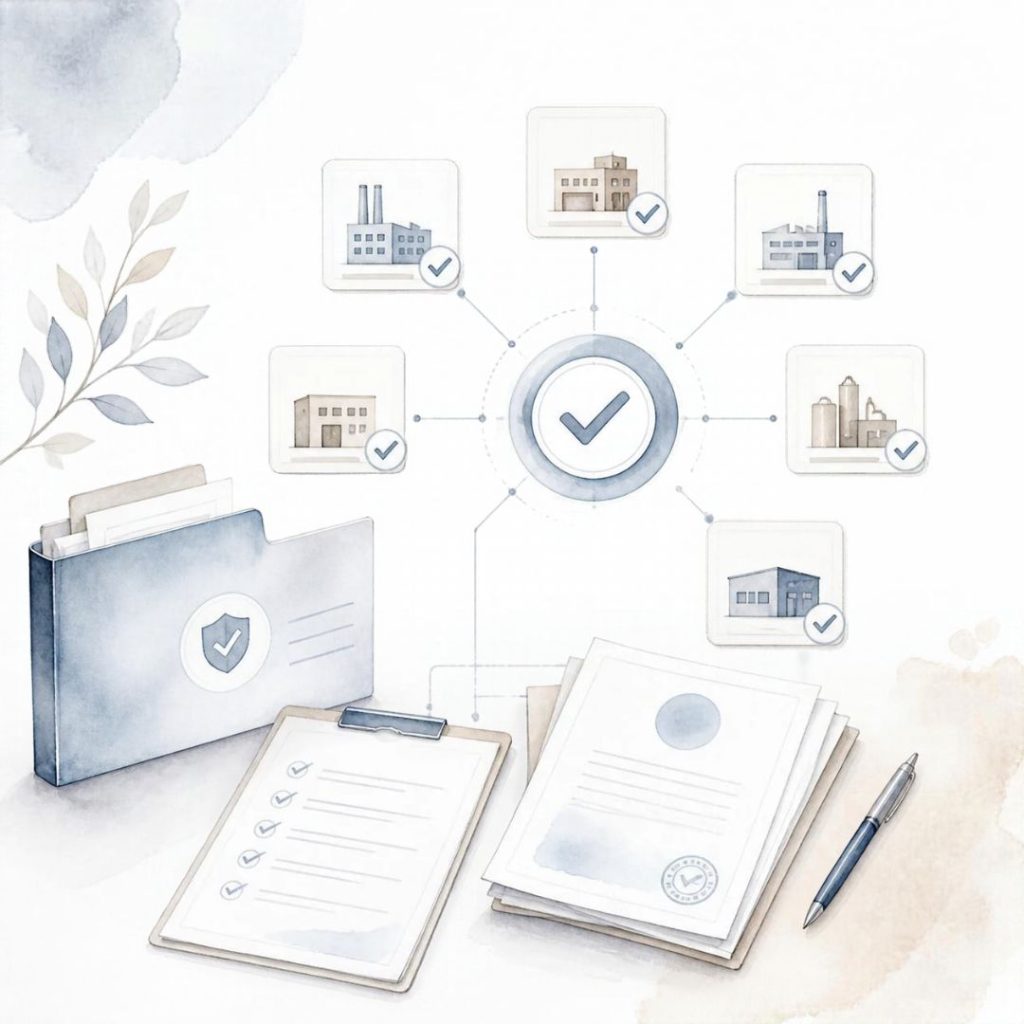
After approval, performance matters
Supplier approval does not complete the evaluation.
Only day-to-day business shows whether the provider works reliably over time.
Depending on the supplier, relevant performance data should therefore be monitored.
This may include delivery dates or quality deviations. Complaints are also an important indication of actual performance.
Not every evaluation needs to happen in an annual review.
What matters more is that changes become visible and feed into procurement decisions.
A supplier may have been rated positively at approval and later develop problems. Equally, a new provider may become an important source of supply over time.
Supplier qualification therefore leads directly into developing a procurement strategy.
Embedding sustainability and compliance sensibly
Sustainability and compliance requirements are part of supplier review in many companies.
The scope should still fit the specific risk.
For certain suppliers, environmental requirements may matter. In other cases, social standards are relevant.
Compliance focuses on different questions. These may include sanctions or corruption risks.
What matters is that such information is not only requested.
A completed questionnaire has little value if nobody evaluates the answers.
It should therefore be defined what follows from a review result.
Some suppliers can be approved without restriction. Others may need to provide additional evidence. If the risk is not acceptable, approval must also be capable of being declined.
The article on sustainable procurement explains how sustainability requirements can be integrated into procurement decisions.
Common mistakes in supplier qualification
Many weaknesses arise from time pressure or unclear responsibilities.
Typical mistakes include:
- suppliers are created before the review is complete
- criteria are not defined by category or risk class
- business functions involve procurement too late
- certificates are filed but not evaluated
- approvals are not properly documented
- master data remains incomplete
- old approvals are not reviewed again
- critical suppliers go through the same process as simple standard suppliers
Individual gaps may look harmless.
They become problematic when nobody can later understand why a supplier was approved or what the approval was meant to cover.
Especially under time pressure, it should be documented what was checked and which open points were consciously accepted.
When external support can be useful
Many companies can improve supplier qualification internally.
This requires enough capacity and a clear mandate.
If both are missing, topics often remain unresolved.
This becomes visible, for example, in supplier bases that have grown over time. Inconsistent approval processes are another typical reason to review the approach.
Another case is suppliers that have been in the system for years but have never been re-evaluated.
Reorganisations or new sites can also create a need for action. The same applies when procurement is short of capacity.
External support does not have to turn this into a major project.
Often, it is enough to review the existing process and clarify responsibilities. In other cases, the supplier base needs to be cleaned up or the approval process rebuilt.
SJL Management & Consulting supports companies in connecting supplier qualification with operational procurement processes in a practical way.
More information can be found under Our services. Examples of possible areas of support are available under Projects.
When procurement temporarily lacks leadership or capacity, interim management in procurement can also be a useful option.
Conclusion: create clarity before the first order
Supplier qualification is intended to prevent unsuitable providers from being approved too quickly.
It does not require an overloaded process.
What matters is that the review fits the risk and that the approval is documented clearly.
After approval, the supplier must be properly integrated into operational procurement. Only then does a new provider become a usable supplier.
Companies that want to review supplier qualification or supplier onboarding in procurement can involve SJL Management & Consulting for concept development and implementation.
Talk to us if your approval process needs to work faster and more reliably in day-to-day procurement.
FAQ
What is supplier qualification?
Supplier qualification is the review of a new supplier before collaboration begins. It assesses whether the provider is suitable for the intended use and whether the relevant requirements are met.
How does a supplier qualification process work?
The process starts with clarifying the requirement and selecting possible providers. Relevant documents are then reviewed. For critical suppliers, further checks may be required. The process ends with documented approval.
Which criteria matter in supplier qualification?
The relevant criteria depend on the category and risk. Quality and delivery capability are often reviewed. Depending on the procurement case, financial stability, compliance or technical requirements may also matter.
What does supplier onboarding mean?
Supplier onboarding means integrating an approved supplier into the operational procurement process. This includes master data, ordering routes and coordination around invoices or contacts.
What is the difference between supplier qualification and supplier approval?
Supplier qualification is the actual review. Supplier approval is the subsequent decision that the provider may be used.
When is a supplier audit necessary?
An audit can be useful for critical suppliers when a document review is not sufficient. This applies, for example, to quality-critical or regulated procurement cases.
What happens after supplier approval?
After approval, the supplier is transferred into ongoing supplier management. Its actual performance is monitored and reviewed again if necessary.
What role does procurement play in supplier qualification?
Procurement coordinates the process and evaluates the commercial side. Depending on the procurement case, other business functions are involved.