



Introduction
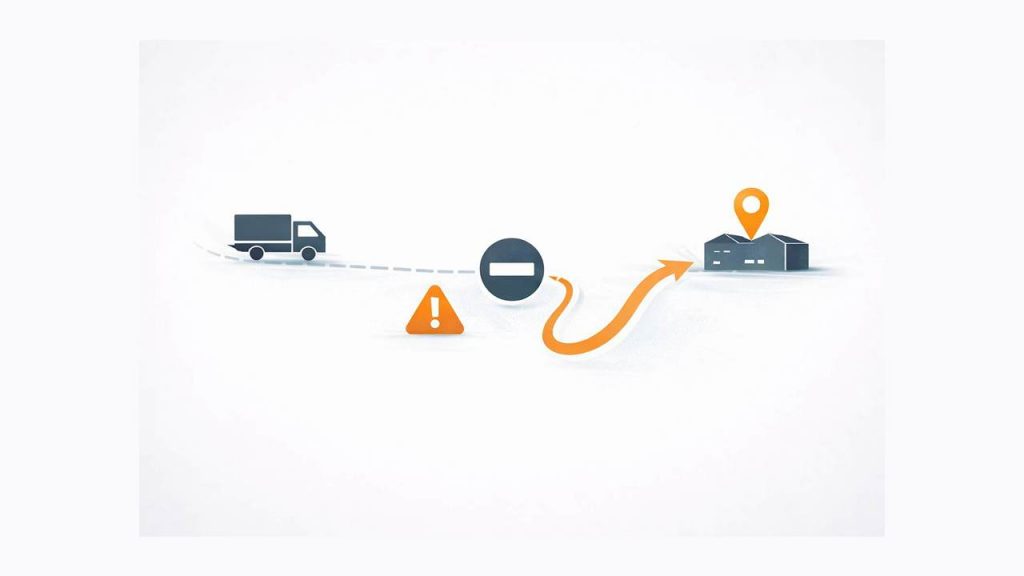
Current developments clearly show how fragile global supply chains have become. Geopolitical tensions, volatile markets and increasing cost pressure mean that companies have to manage procurement under entirely new conditions.
What used to be plannable is now uncertain at short notice. Delivery dates are postponed, prices change within just a few weeks and individual suppliers fail unexpectedly.
This creates a typical picture in procurement:
- many parallel escalations
- limited transparency
- decisions under intense time pressure
- direct impact on production and financial performance
It is precisely in this situation that it becomes clear whether procurement is being led in a structured way or whether it is falling into pure reaction mode.
The central question is:
How can procurement be stabilised quickly in a crisis in order to ensure security of supply and regain operational capability?
The answer does not lie in individual measures, but in a clear interaction between leadership, prioritisation and operational control.
Why Procurement Becomes the Central Control Lever in a Crisis
In stable times, procurement is often seen as a supporting function. In a supply chain crisis, this role changes immediately — procurement becomes the central lever for security of supply, cost control and risk management in procurement.
Suddenly, procurement decides on three critical factors at the same time:
- whether material is available
- at what cost it is purchased
- which risks the company carries
This makes procurement the central control unit.
The problem is that many procurement organisations are optimised for efficiency — not for crisis resilience. Decision-making paths are too long, responsibilities are not clear enough, and risks have often only been considered selectively.
In this situation, one thing becomes clear:
Crisis management in procurement is not an additional task. It is a leadership task.
Typical Risks in Procurement During Crisis Situations
Crises in procurement rarely arise from one single event. In most cases, several risk factors come together at the same time.
Delivery failures are among the most visible problems. When critical components are missing, this immediately affects production and delivery capability. It becomes particularly critical when no alternatives are available.
At the same time, price volatility increases. Markets react faster, availability becomes tighter, and traditional negotiation logic only works to a limited extent.
A frequently underestimated risk is structural dependency. Many companies only realise during a crisis how strongly they depend on individual suppliers or regions.
Quality problems are another factor. Under pressure, stability can decline among some suppliers — with direct consequences for processes and costs.
What is often missing is transparency. In many organisations, it is not clear:
- which materials are critical
- which suppliers carry risk
- where short-term action is required
This combination makes one thing clear:
Risk management in procurement determines operational capability in a crisis — not in theory, but in practice.
The 3 Priorities in Procurement During a Crisis
In a crisis, the objective is not to optimise everything at the same time. What matters is setting the right priorities.
1. Secure supply
Without material, everything else comes to a standstill. In this phase, availability matters more than perfect conditions.
2. Create transparency
Only those who understand the risks can make meaningful decisions. This applies to materials, suppliers and demand.
3. Increase decision-making capability
Slow coordination processes are not viable. Decisions must be made faster and assigned clear responsibility.
These three points sound simple. In practice, they are not — because many organisations are not designed for them.
Stabilising Procurement: What Needs to Be Done Now
When procurement is under pressure, theoretical discussion does not help. Clear and actionable steps are needed.
The first lever is focus.
Not every part is critical. Not every supplier requires immediate attention. In many companies, fewer than 20% of categories cause the majority of risks.
These must be prioritised.
In practice, this means:
- identifying critical materials
- making risk-prone suppliers visible
- reviewing alternative sources of supply
- using resources in a targeted way
At the same time, decision-making paths must be shortened. Multi-stage coordination delays responses. Clear responsibilities are essential.
Another central point is direct communication with suppliers. Standard processes are not enough in a crisis. Personal coordination, fast feedback and clear expectations become more important.
A typical observation from practice:
As soon as procurement starts prioritising in a structured way and actively steering again, the number of escalations decreases significantly — not because problems disappear, but because they are dealt with in a targeted way.
Risk Management in Procurement: From Reactive to Controllable
Effective risk management in procurement does not begin with tools, but with structure.
1. Identify risks
Which materials are critical? Which suppliers are unstable? Where do dependencies exist?
2. Evaluate risks
Not every risk is relevant. What matters is the combination of probability and impact.
3. Derive measures
Alternative suppliers, adjustments to planning and deliberate inventory strategies.
4. Establish monitoring
Risks change dynamically. What is stable today can become critical tomorrow.
Many organisations stop at the first step. Risks are recognised — but not controlled.
A functioning system connects all four steps and makes risks actively controllable.
Leadership in Procurement Under Pressure
Crises in procurement are rarely a purely technical issue. Above all, they are a leadership issue.
Under pressure, it becomes clear whether priorities are clear. If everything is important at the same time, there is no orientation.
In this situation, leadership means:
- making decisions despite uncertainty
- setting priorities consistently
- protecting teams from unnecessary complexity
An experienced procurement manager ensures that focus is maintained. They prevent the organisation from getting lost in details and make sure that critical issues are addressed.
This is exactly the difference between structured crisis management in procurement and pure reaction.
When Interim Management in Procurement Makes Sense in Crisis Situations
In many crisis situations, the existing organisation reaches its limits. Not because employees are not capable, but because capacity, experience or clear leadership are missing.
This is where interim management in procurement can make sense.
An external manager brings:
- speed
- clear prioritisation
- decision-making strength under pressure
Unlike classic projects, this is not about concepts. It is about operational stabilisation.
Especially in situations with high uncertainty, this form of support can help restore operational capability quickly.
Typical Mistakes in Crisis Management in Procurement
Many problems are not new — they simply become more visible.
Typical mistakes include:
- reacting too late
- setting the wrong priorities
- unclear responsibilities
- too much analysis, too little implementation
A critical supplier without backup is no longer a risk — it is an acute problem.
These patterns are understandable. That is exactly why it is essential to address them actively.
Conclusion
Stabilising procurement in a crisis is not a methodological problem. It is a question of leadership, prioritisation and implementation.
Procurement becomes stable when supply is prioritised, transparency is created and decisions are accelerated.
Risk management, structure and communication must work together. Without clear leadership, even good approaches remain ineffective.
Companies that implement this consistently gain more than stability — they gain speed and resilience for the future.
If procurement is permanently in reaction mode, the lever usually lies in structure and leadership.
In many cases, it is possible to identify within a short time where the greatest risks lie and which measures will have an immediate effect.
In a no-obligation initial consultation, we will clearly assess your situation and identify concrete starting points.
FAQ
What is meant by risk management in procurement?
The systematic identification, evaluation and control of risks in the supply chain.
Which risks exist in procurement?
Delivery failures, price increases, quality problems, dependencies and a lack of transparency.
How can procurement be stabilised in a crisis?
Through clear prioritisation, fast decision-making paths and targeted control of critical issues.
Which measures have priority?
Securing supply, creating transparency and increasing decision-making capability.
When is interim management in procurement useful?
When rapid stabilisation is required and internal resources or experience are not sufficient.
What does operational security in procurement mean?
That procurement continues to function reliably under pressure and ensures the company’s supply.